Android app development
Reliable Android applications planned around device coverage, user journeys, business goals, and long-term support.
Learn more Connect on WhatsApp
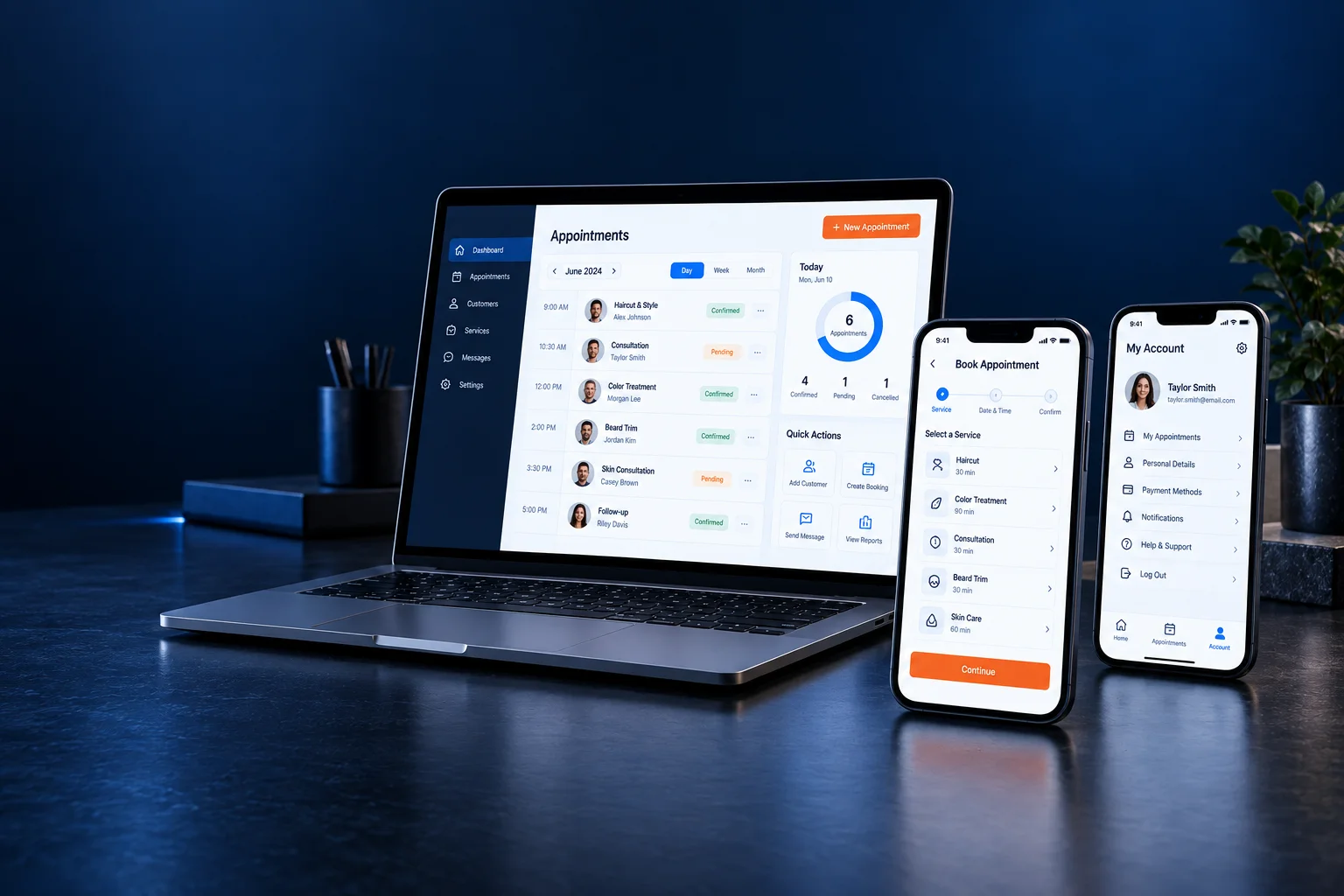
 We build mobile applications for iOS and Android, connecting thoughtful design with reliable integrations and ongoing product support.
WHAT WE COVER
Reliable Android applications planned around device coverage, user journeys, business goals, and long-term support.
Learn moreFocused iPhone and iPad experiences with thoughtful interaction design, secure integrations, testing, and release preparation.
Learn moreA shared application approach when it supports the required experience, delivery timeline, budget, and maintenance model.
Learn moreResearch, flows, wireframes, prototypes, visual design, accessibility, and interaction patterns built for mobile contexts.
Learn moreSecure APIs, authentication, payments, notifications, analytics, databases, and connections to existing business systems.
Learn moreFunctional, device, network, usability, performance, security, and release testing before customers depend on the app.
Learn moreStore assets, release preparation, privacy details, staged rollout, monitoring, crash reporting, and post-launch iteration.
Learn moreCompatibility updates, security fixes, performance improvements, feature releases, analytics reviews, and operational support.
Learn moreOUR APPROACH
We plan Android apps around the users, devices, permissions, integrations, and support expectations that matter to your product. Testing considers different screen sizes, operating system versions, connectivity conditions, and real-world workflows.
iOS development combines clear interaction design with dependable application behavior, privacy considerations, backend integration, device testing, and a release process your team can operate after launch.
Cross-platform development can reduce duplicated implementation when the product needs a consistent experience across Android and iOS. We recommend it only when the shared approach fits the product interactions, performance needs, integrations, and future roadmap.
Good mobile UX reduces friction in the moments that matter: onboarding, search, forms, payments, notifications, and recovery from errors. We validate the core journeys before committing the full build.
Mobile applications need dependable services for identity, data, payments, notifications, files, analytics, and business rules. We design documented APIs and clear failure states so the app and the teams supporting it know what happens next.
Quality work covers functional journeys, device compatibility, performance, accessibility, privacy, network changes, and release readiness. Launch preparation includes store content, versioning, monitoring, and a plan for responding to early feedback.
A mobile app needs care after release as operating systems, devices, dependencies, security expectations, and user needs change. Support can include fixes, upgrades, analytics reviews, feature work, and release management.
Mobile app cost depends on the number of platforms, user roles, screens, integrations, backend complexity, offline behavior, security requirements, testing depth, and post-launch support. A focused first release is usually easier to estimate than a complete product roadmap.
Discovery defines the audience, product promise, essential journey, constraints, and success measures. Design makes the experience testable. Engineering builds the app and backend. Testing and release preparation protect quality, while post-launch analytics guide the next improvements.
FREQUENTLY ASKED QUESTIONS
Cost depends on whether the app targets Android, iOS, or both; the number of journeys and roles; backend and API work; payments; notifications; security; testing; and ongoing support. Nixoware estimates after defining a practical first release.
Native development can be appropriate for platform-specific experiences or demanding device capabilities. Cross-platform development can be effective when Android and iOS share most journeys and the product benefits from a common implementation. The right choice depends on the product, users, budget, and roadmap.
Timeline varies with product scope, design readiness, integrations, backend work, testing, and store requirements. Defining a focused first release gives the team a more dependable schedule than estimating an entire product from a feature list.
Yes. Backend work can include authentication, databases, APIs, payments, notifications, file handling, analytics, permissions, integrations, and monitoring.
Yes. Maintenance can include operating system compatibility, security updates, bug fixes, performance work, analytics reviews, feature upgrades, and store release support.